Health and Safety Policy for Man and Van Barnsbury
 Man and Van Barnsbury is committed to maintaining a safe, healthy, and professional working environment for staff, customers, contractors, and members of the public. This policy sets out the standards we follow to reduce risk during vehicle loading, lifting, transport, and delivery activities. Our approach is based on prevention, awareness, and responsible working practices.
The Man and Van Barnsbury health and safety policy applies to all operations, whether a job involves a single item, a full household move, or business transport. We expect every team member to act with care, report hazards promptly, and follow safe systems of work. Safety is treated as a core part of service quality, not an added extra.
Our business recognises that moving goods can involve physical strain, traffic exposure, manual handling risks, and the possibility of damage to property or injury. For this reason, our man and van safety policy is built around clear procedures, suitable equipment, and proper training.
Responsibilities and Safe Working Standards
All workers must take reasonable care of their own safety and that of others. This includes using correct lifting techniques, wearing suitable footwear, and avoiding unsafe shortcuts. Managers are responsible for ensuring vehicles, tools, and equipment are kept in good condition and that unsafe work is stopped immediately if required.
Before any move begins, staff should assess the task and identify possible hazards such as narrow access routes, unstable furniture, poor lighting, slippery surfaces, or heavy awkward items. Where needed, control measures may include additional lifting support, route planning, protective coverings, or temporary removal of obstructions.
Customers may be asked to inform us of heavy, fragile, valuable, or unusually shaped items in advance. This helps the Barnsbury man and van service plan the safest method for handling goods and prevents avoidable incidents during loading or unloading.
Manual Handling and Vehicle Safety
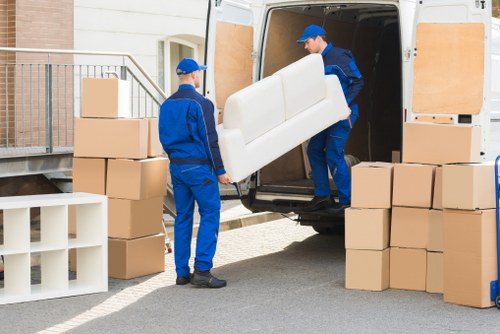
 Manual handling is one of the main risks in any man and van operation. To reduce the chance of strain or injury, staff are trained to lift with a straight back, bend the knees, keep loads close to the body, and ask for assistance when an item is too heavy or awkward to move alone. Trolleys, straps, blankets, and other handling aids should be used where appropriate.
 Vehicles must be loaded in a stable and balanced way so that items do not shift during transit. Heavier goods should generally be placed low and secured properly. Fragile items should be separated and protected using suitable wrapping or padding. Drivers are responsible for checking that doors, ramps, and securing equipment are safe before setting off.
Road safety is equally important. Drivers must follow all traffic laws, avoid distractions, maintain safe speeds, and leave enough time for journeys. Fatigue, poor weather, and vehicle defects can increase risk, so workers should never drive when unfit to do so. Any fault affecting brakes, lights, tyres, or steering must be reported and addressed without delay.
Health, Welfare, and Protective Measures
The company supports good welfare practices to help prevent stress, dehydration, tiredness, and poor concentration. Staff should take suitable breaks, drink water regularly, and speak up if a task is becoming unsafe or excessively demanding. Work should be organised in a way that allows realistic time for loading, transport, and unloading.
Personal protective equipment may be required depending on the task. This can include gloves, high-visibility clothing, or supportive footwear. Any equipment issued must be used correctly and kept in usable condition. Where an item may present a sharp edge, chemical residue, or contamination risk, additional precautions must be taken before handling.
We also expect a respectful and orderly working environment. Aggressive behaviour, misuse of equipment, or failure to follow instructions will not be tolerated. Health and safety is the shared responsibility of everyone involved in the man and van Barnsbury service, and good communication helps us maintain safe standards throughout each job.
Incidents, Reporting, and Review
 If an accident, near miss, injury, or property damage occurs, it must be reported as soon as possible so that action can be taken. Prompt reporting allows the company to investigate the cause, make improvements, and reduce the chance of a repeat incident. Serious incidents will be reviewed with care and recorded in line with internal procedures.
Any hazard identified during a job should be escalated immediately. This may include unsafe access, defective equipment, unstable furniture, exposed wiring, or environmental conditions that make the task more dangerous than expected. When necessary, the work should pause until the risk has been removed or reduced to an acceptable level.
Our health and safety policy for Man and Van Barnsbury is reviewed regularly to remain effective and practical. Updates may be made following incidents, operational changes, or feedback from safety assessments. The aim is to keep all work controlled, responsible, and consistent with best practice.
Policy commitment: we will continue to promote safe lifting, careful driving, suitable equipment use, and clear communication across all moving tasks.
This policy applies to every stage of service delivery and supports the ongoing safety of staff, customers, and property.
 In summary, Man and Van Barnsbury is dedicated to preventing harm through planning, training, equipment checks, and disciplined working methods. By keeping safety at the centre of every move, we aim to deliver a reliable service while protecting people, property, and wellbeing.